Standards-led
Design and install aligned to AS/NZS PV and grid-connect practice, with tidy documentation for owners and insurers.

Solar Power System
A clear, meeting-led process ??needs, site visit, design, install, commissioning and maintenance ??delivered by a qualified, standards-focused team.
Most clients come to us with practical goals: lower power bills, prepare for an EV, store daytime energy with a battery, reduce carbon, or future-proof a commercial site. We start with your need, not a one-size kit.
New Zealand systems must be designed and installed to the right electrical and PV standards (including AS/NZS 5033 for arrays and AS/NZS 4777 for grid connection). We treat those rules as the baseline for trust ??not optional extras.
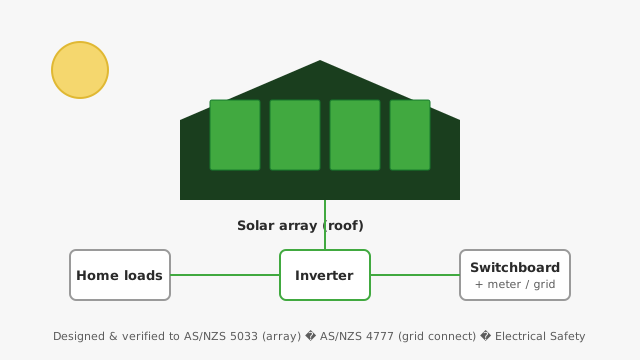
Example residential array — layout always follows your roof, shading and switchboard.
Qualified & reliable
Design and install aligned to AS/NZS PV and grid-connect practice, with tidy documentation for owners and insurers.
We understand verification, COC/COV-style evidence and board requirements ??so commissioning is not a rushed tick-box.
You meet us before survey, after options, and before install. No surprise scope changes mid-roof.
Commissioning, handover, monitoring tips and maintenance plans keep the system earning for years.


Prefer to see licences, insurance certificates or sample handover packs? Bring them to the first meeting ??or ask us to send a pack.
Process at a glance
Nine clear stages. Grey steps are customer meetings ??so you stay in control of cost, look and timing.

We listen first: bill pain points, roof age, planned renovations, EV timeline, battery interest, and how long you plan to stay in the property. You get a plain-language summary of what solar can (and cannot) do for your situation.
A short sit-down (on site or video) to agree goals, risks and next steps. We explain metering, export, and what a site visit will check ??so the survey is focused, not fishing.
On the roof and at the switchboard we record orientation, pitch, shading, fixing method, cable routes, spare board ways, earthing and any upgrade needs. Photos and notes feed the design ??not guesswork from Google Maps alone.
We walk through 1?? system options (panel count, inverter type, optional battery), ballpark yield and what changes cost. You choose the direction before detailed drawings are locked.
String or module layout, inverter sizing, protection, labelling and documentation are prepared so installers and inspectors see the same picture. Commercial sites may also need network or building-consent coordination ??we flag that early.
Final review of look, cost, programme and any roofing or board upgrade. You sign off before materials are ordered and a date is locked. Changes after this point are written and agreed ??no silent scope creep.
Mounts and panels go on the roof; DC and AC wiring, inverter, isolation and labelling are completed to the approved design. Site is left tidy; weather windows and neighbour access are planned with you in advance.
We test generation, protections, shutdown and monitoring, then hand over certificates and a simple ?�how to live with your system??guide. Where independent inspection or insurer evidence is required, we prepare the pack properly ?? drawing on our electrical inspection experience.
Solar is low-maintenance, not zero-maintenance. We recommend periodic visual checks, inverter health reviews, and cleaning where pollen or salt spray builds up. Optional service plans can include performance checks and documentation updates if you add a battery or EV charger later.
If you already have solar and need inspection or remedial verification, see our Electrical Inspection service ??many owners engage us only for that step.
Book a discovery meeting. Bring a recent power bill if you have one ??it speeds up the needs discussion.
Have photos of your roof or switchboard? Attach them ??we will use them in step 1??.